Why your walls lean in the first place
Rooms photograph crooked for one of three reasons, and knowing which one you are looking at decides how it gets fixed.
The first is camera tilt. If the back of the phone is not perfectly vertical, parallel walls converge - tilt down and they lean inward at the top, tilt up and they splay outward. This is by far the most common cause.
The second is a rotated horizon. The camera is level front to back but rotated a degree or two, so skirting boards and worktops slope across the frame. Even one degree is visible to the eye.
The third is lens distortion. Wide-angle lenses, including the ultra-wide on most phones, bow straight lines outward near the edges of the frame. Doorframes curve and ceilings dome.
Why it matters more than it looks like it should
Buyers and guests will not say 'the verticals are off'. They will say the photo looks cheap, or that something about the room feels wrong. Converging walls also distort perceived size - a room whose walls lean inward reads as narrower and lower than it actually is.
In a search grid, where thumbnails sit next to competing listings shot straight, a tilted photo loses the comparison before anyone reads the price.
Fixing photos you already have
You do not need to return to the property. Every kind of crookedness above can be corrected on the existing file, as long as the original is reasonably sharp and there is a little room around the subject to crop into.
Rotation: the two-minute fix
A sloping horizon is corrected by rotating the image by a fraction of a degree until a known-horizontal line - a worktop, a windowsill, the top of a door - runs parallel to the frame edge. Every phone gallery app and every desktop editor can do this.
Rotation always crops slightly. That is fine on a wide room shot and problematic on a photo that was already tight, which is a good argument for framing a little loose when you shoot.
Perspective: correcting converging walls
Leaning verticals need a keystone or perspective correction, not rotation. This stretches one edge of the frame relative to the other so that vertical lines become genuinely vertical.
Do it against the most prominent vertical in the room - a door edge or a room corner - rather than trying to straighten everything at once. Over-correction is as noticeable as no correction.
Lens distortion: straighten the bow
Barrel distortion from ultra-wide lenses is corrected with a lens profile or a manual distortion slider. If the bowing is severe and only affects the outer edge of the frame, cropping in slightly is often the cleaner solution.
Doing it across a whole gallery
Correcting one photo by hand is quick. Correcting twenty-five is where most hosts and agents give up, and where a half-fixed gallery ends up published - three straight photos next to twenty tilted ones, which looks worse than consistency in either direction.
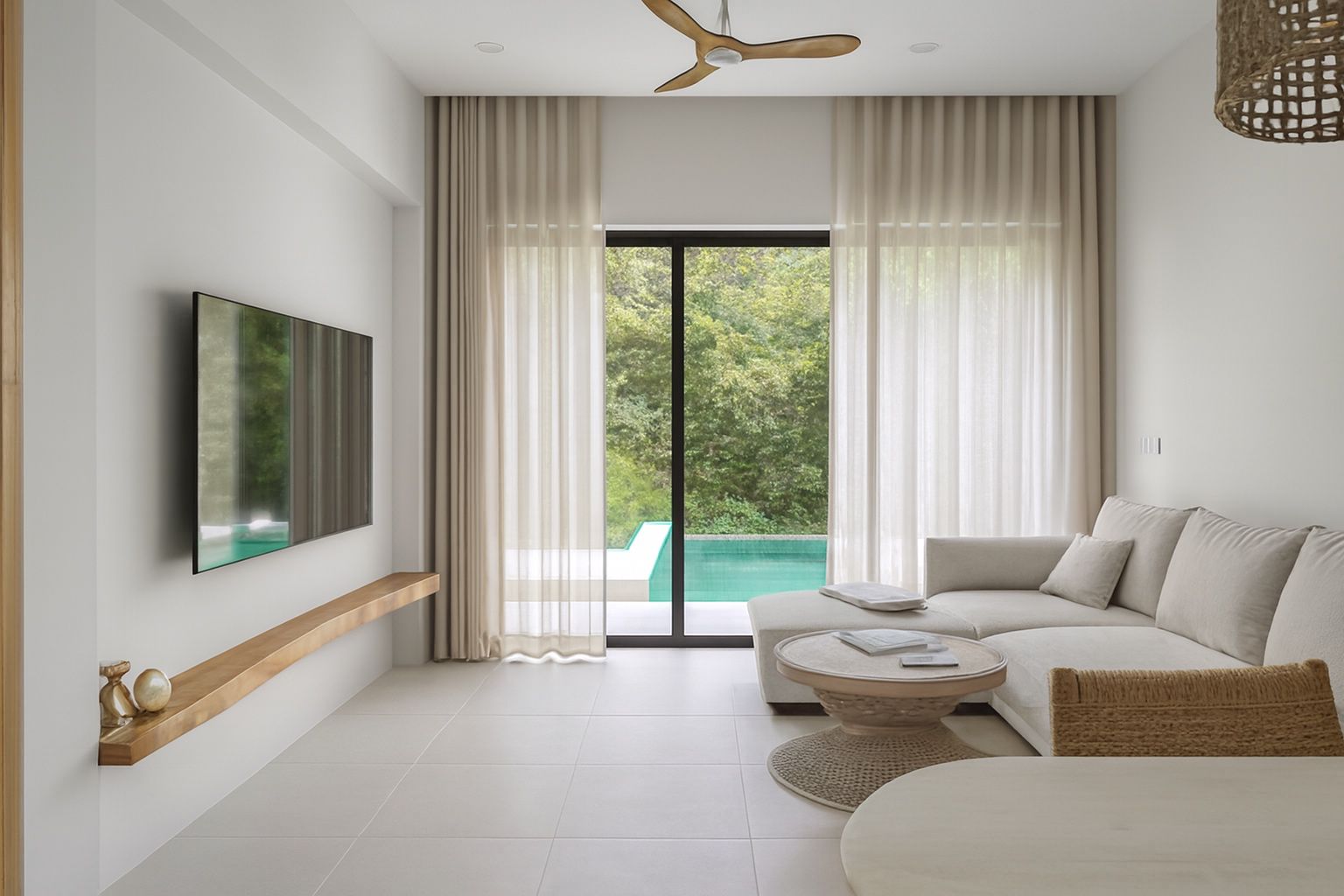
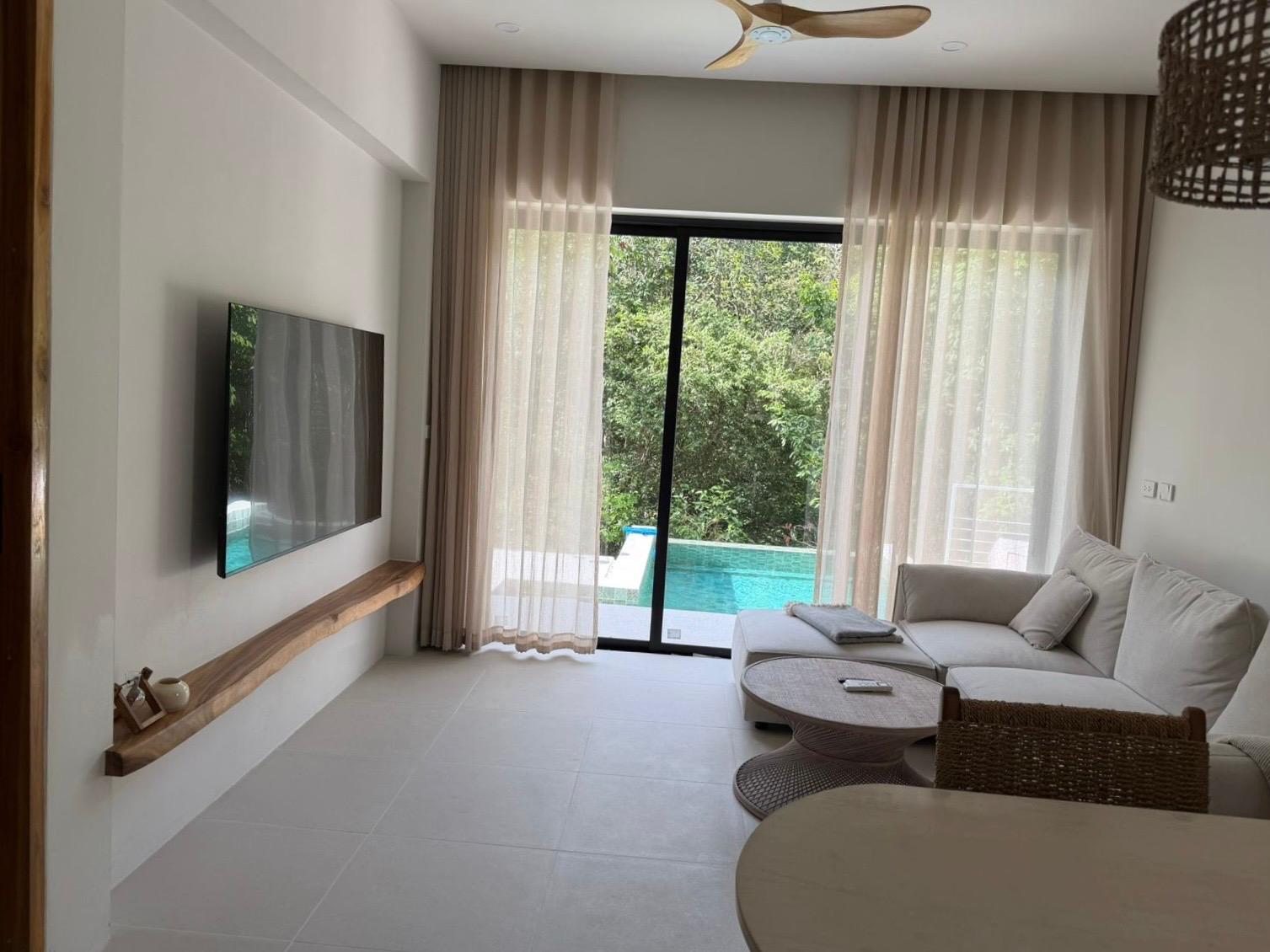
This is exactly the finishing step ProLister automates. Upload the photos you already have and each image comes back with verticals corrected, exposure balanced and colour neutralised, in seconds per image rather than minutes. Multiple images can be processed in one run and kept together in a folder per property, so a full gallery stays consistent.
Nothing in the room is added, removed or moved. The correction works on the capture - geometry, light and colour - so the property in the photo is still the property the buyer will walk into.
When a reshoot really is the answer
Correction has limits. If the shot is genuinely unusable, no amount of geometry work saves it.
- Severe tilt - beyond roughly eight to ten degrees, correcting it crops away too much of the room.
- Motion blur or missed focus - detail that was never captured cannot be recovered.
- Wrong vantage point - a photo taken from the doorway of a large room cannot be re-framed into a corner shot.
- Empty rooms shot before furnishing, when the listing is now furnished.
How to shoot straight next time
Prevention costs nothing. Turn on the grid and level indicator in your phone's camera settings and keep the back of the phone perfectly vertical rather than angling it down toward the floor.
Shoot from chest height, stand in a corner and aim at the opposite corner, and leave a little space around the edges of the frame so that any later correction has room to crop into.
Frequently asked questions
Can crooked photos be fixed without retaking them?
In most cases yes. Rotation fixes sloping horizons, perspective correction fixes leaning walls and lens profiles fix bowing. Only severe tilt, blur or a wrong vantage point genuinely require a reshoot.
Does straightening a photo lose quality?
It crops slightly, because rotating or stretching the frame leaves empty corners that have to be trimmed. Starting from a full-resolution phone photo, the loss is invisible at listing sizes.
Is correcting perspective considered misleading?
No. Straightening verticals is standard photographic practice and does not change what the property contains. What must be disclosed is anything that adds, removes or alters features.
How much tilt is too much to correct?
Roughly eight to ten degrees. Beyond that, correction crops away so much of the frame that the composition falls apart and it is faster to retake the shot.
Can I fix an entire gallery at once?
Yes. Uploading the whole set in one run keeps geometry, exposure and colour consistent across every image, which is what makes a gallery look professionally shot.